
A Day in the Life of an Au Pair in Australia

A Day in the Life of an Au Pair in Australia
(With School-Aged Kids vs Stay-at-Home Kids)
One of the most common questions both families and au pairs ask is:
“What does a typical day actually look like?”
The answer depends a lot on the children’s ages, but most au pair days follow a gentle rhythm, a balance of childcare, routine, and personal time.
Below are two realistic examples of what a day in the life of an au pair in Australia can look like.
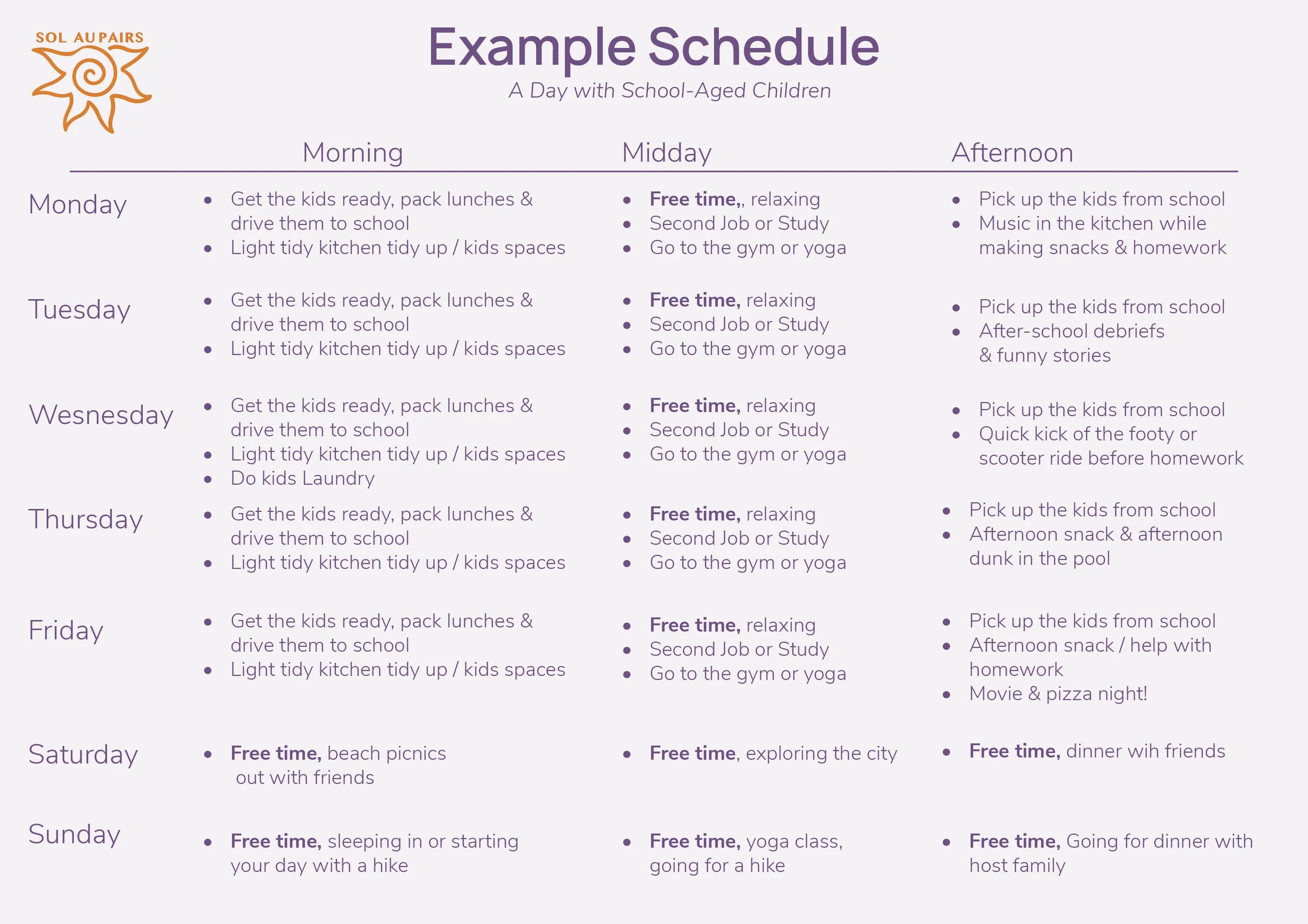
A Day with School-Aged Children
This is one of the most common au pair arrangements in Australia.
Morning (7:00–9:00am)
Helping the kids wake up and get ready
Breakfast, packing lunches, school bags
School drop-off (walking, driving, or public transport)
Light tidy-up of breakfast dishes or kids’ spaces
Once the children are at school, the au pair’s work time usually finishes for the morning.
Midday (Personal Time)
This is the au pair’s own time, not working hours.
They might:
Go to the gym or yoga
Meet friends for coffee
Study or work a second job
Explore the local area
Relax at home
This midday break is a big part of what makes au pair life sustainable and enjoyable.
Afternoon (3:00–6:00pm)
School pick-up
Afternoon snack
Homework support
Playtime at home, the park, or beach
Helping with the after-school routine
Some families finish here, others may ask for:
One or two evenings of babysitting per week (by agreement)
Evening
The au pair is usually off duty, free to enjoy their evening, unless babysitting has been planned in advance.
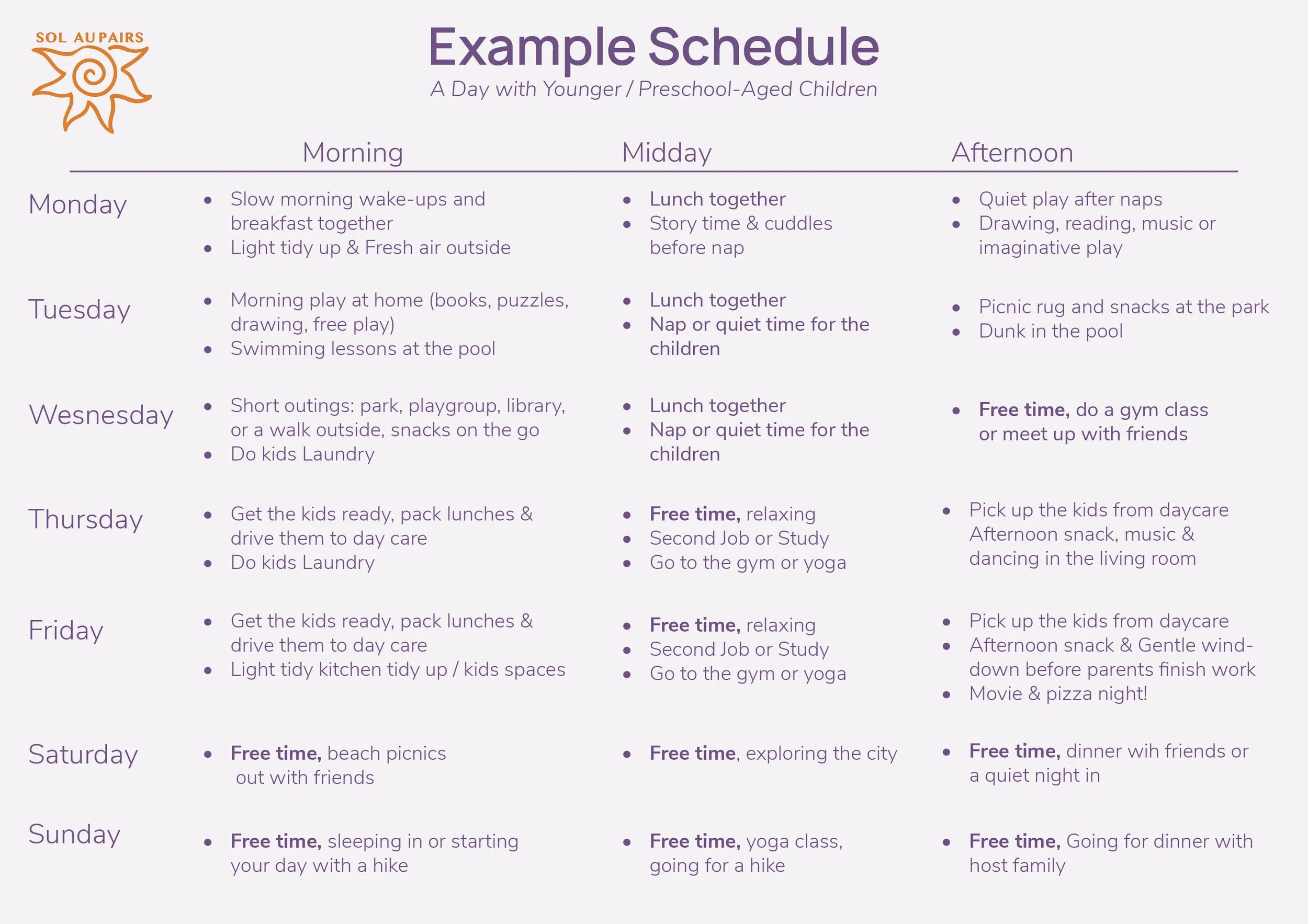
A Day with Stay-at-Home or Preschool-Aged Children
When children are younger, days are more hands-on — but still structured and balanced.
Morning (7:30–12:00pm)
Morning routine and breakfast
Getting dressed
Playtime at home
Creative activities (drawing, books, puzzles)
Outdoor time: walks, parks, playgroups
Some families also have:
Part-day daycare or kindy
Swimming lessons or activities
Midday (Break or Reset)
Depending on the family:
Children may nap
The au pair may have a break
Or the au pair may finish for the day
Even on full childcare days, au pairs should not be working long full-day hours, five days a week.
It’s completely appropriate to have a couple of full days, but the overall week should stay balanced.
Afternoon (2:30–5:30pm)
Quiet play after nap
Snack time
Short outings or backyard play
Winding down before parents finish work
Evenings
As with school-aged kids, evenings are usually the au pair’s own time, unless babysitting has been agreed on in advance.
Why Clear Schedules Matter
The most successful au pair placements all have one thing in common:
clear, realistic schedules.
This helps:
Au pairs know when they’re working and when they’re not
Families avoid burnout or confusion
Everyone feel respected and supported
A good au pair arrangement feels predictable, calm, and fair.
Is This the Right Fit for You?
An au pair lifestyle works best when:
Families value routine and communication
Au pairs enjoy being part of a household
Both sides understand it’s a shared experience, not employment
If you’re exploring whether this could work for your family, or for you as an au pair, learning what daily life looks like is a great place to start.
Thinking about becoming an au pair in Australia? Apply here.
Considering hosting an au pair? Learn more about how it works for families